
THE RISE AND FALL OF THE BUFFALO NORSEMEN: PART 4
December 7, 1973.
Ontario Hockey Junior A League Toronto Marlboros vs the Kitchener Rangers.
Eighteen year-old Toronto defenseman Greg Neeld collapses to the ice, white hot pain blazing deep into his skull. He has just beaten his sixteen year-old opponent to a puck in the corner, but as he skates away a stick desperate to slow down any part of him finds his left eye. The pain comes from a place Neeld has never felt anything before, a place he shouldn’t ever feel anything, he thinks. In an instant, the 11th-ranked prospect in the league, a smooth-skating defenseman who has drawn comparisons to Bobby Orr, is lying crumpled on the ice, his future in hockey seeming to disappear. He screams to his teammates: “I can’t see! I can’t see!”
“It’s all fun and games till someone loses an eye.”
– Greg Neeld, interview with the Toronto Star, June 14, 2013
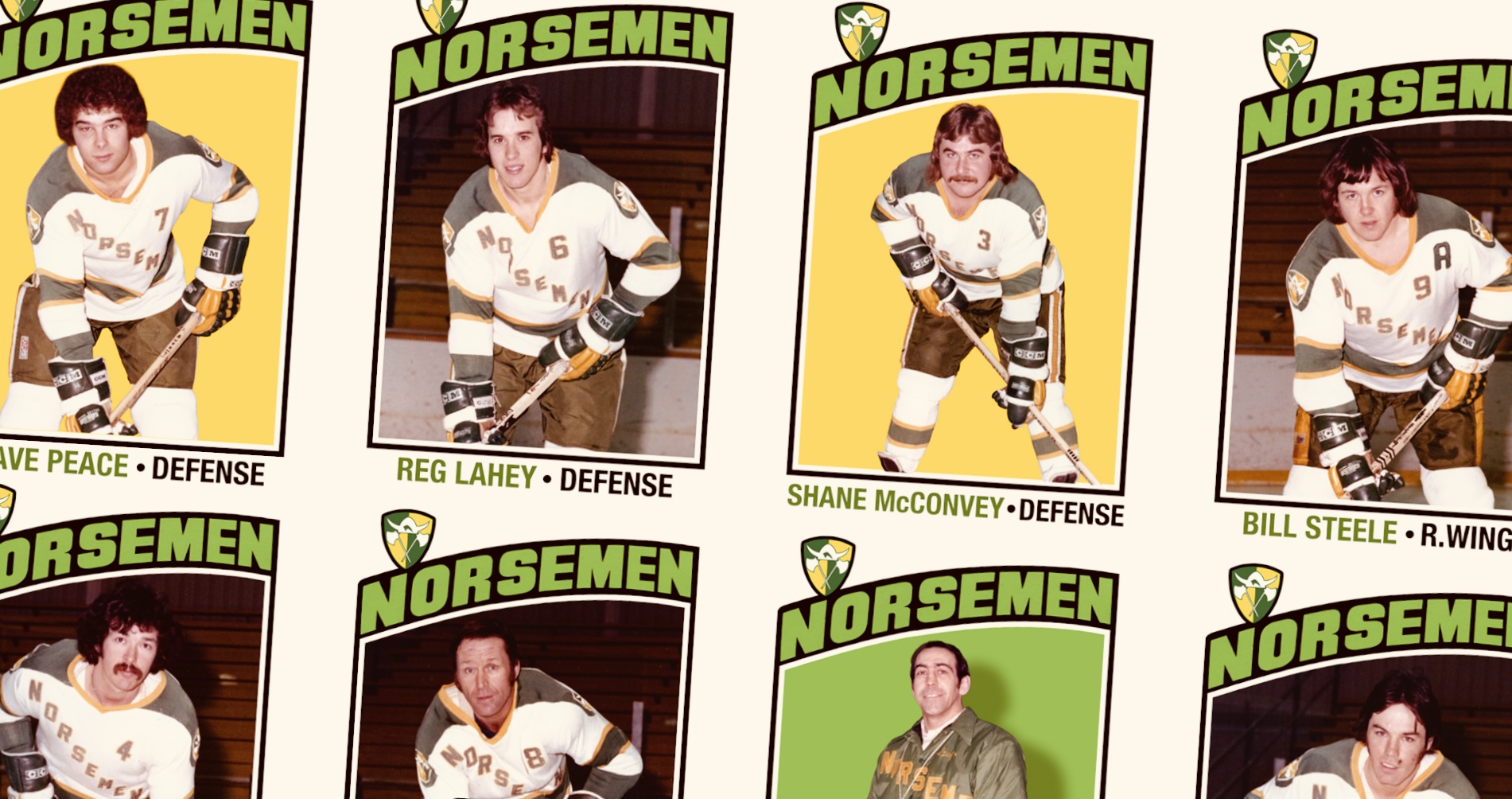
The home team locker room at the Tonawanda Sports Center is full of men headed in opposite directions. There’s a newly minted player-coach in the final year of a storied minor-league career. There’s a defenseman seemingly destined for the NHL, half-blinded but determined to make it to the show—even if only for a “cup of coffee,” as the old-timers say. There are ex-Sabres hoping to be future Sabres. There are kids fighting their way up, and men (by several reports) drinking their way down. There’s a kid off a bus who will one day reach the highest levels of the NHL. There’s a right-winger who will be beaten so badly in a wildly unfair melee that he never plays pro hockey again.
Some are in their twilight; some are in their first light. Most hail from Canada. They stay with families and friends of the Norsemen owners, or in apartments on Meadow Drive across from the rinks, or at the Anchor Motel on River Road. They party at Turks (now Partners) on Oliver & 9th, and eat at Pane’s Restaurant. After that season, they scatter into their separate futures. But for one “unbelievable” season, they are all Norsemen.
Bios
Guy Trottier: Twilight of a Superstar
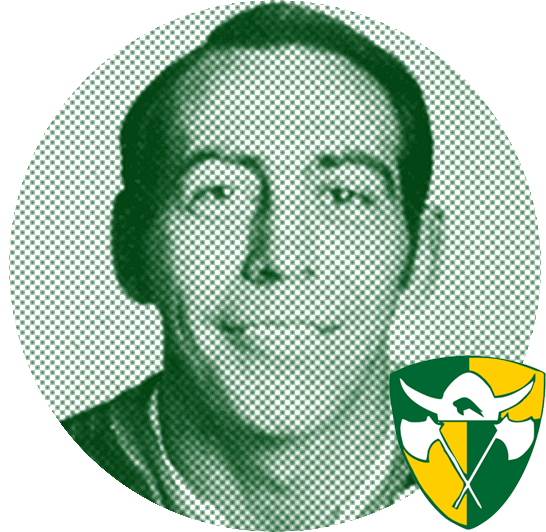
“Tells it like it is” – Guy has already announced his retirement when he hears about the Norsemen player-coach job. He has never coached before, but he believes the key to connecting with his young team is basic respect. “If you can’t relate to your players and have them respect you, you can’t teach them anything,” he says in a Christmas-time interview in the Tonawanda News.
And Guy has a lot to teach. After 12 years as a player, he’s been to “the bigs” with both the Leafs and the Rangers. He is still a Buffalo-area favorite from his championship season with the AHL Buffalo Bisons, where he also holds a single-season scoring record.
His straight-talking style will land him in some hot water. When his Norsemen come out on the losing end of several controversial rulings by NAHL commissioner (and North Tonawanda resident) Jack Timmons, Guy is quick to take to the papers to lash out against perceived injustice.
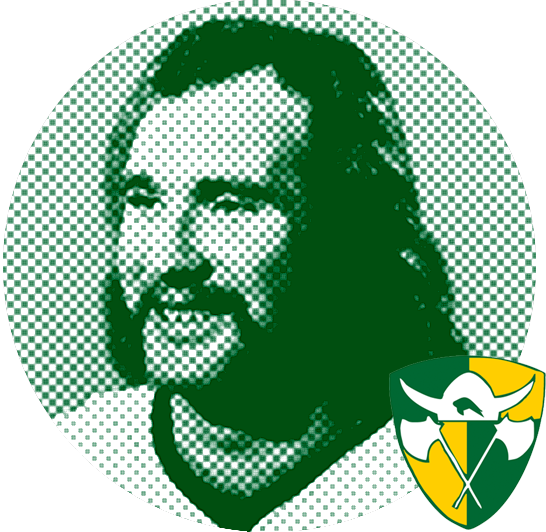
Larry Gould: “Most Valuable” Norsemen
“I know what it takes to get to the NHL” – Larry Gould is voted “Most Valuable Norsemen” by his teammates for the 1975-1976 season. At only 23, he signs with the Norsemen as a free agent, despite spending three years in the Canucks’ system. He’s had a taste of the NHL, and he wants more. “I know what it takes to get to the National Hockey League, and I hope to get it here.” Larry will take over as team captain when Atkinson departs halfway through the season, and go on to lead the Norsemen with 100 points.
Larry is identified as an “early favorite of females” in a 1975 Tonawanda News article. When asked what he thinks of the distinction, he has the correct answer: “I can’t wait for my lovely wife Jeannie and my daughter Lisa to get here.”
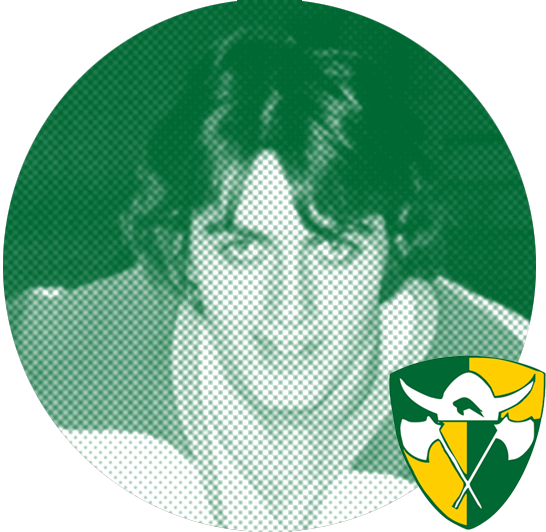
Claude Noel: “Most Popular” Norsemen
Sportsmanlike conduct: Claude Noel starts his hockey career as a defenseman. At just 5’11 and 165 pounds in hockey’s “golden goon” era, however, he is a tough sell. When no pro teams come calling, 20 year-old Claude decides to try out for the Norsemen (general manager Willie Marshall is from the same Ontario town). He wins a free agent contract, and soon begins transitioning to the center position.
The move pays off. Claude will rank second on the team in scoring, and will find his feet and hands much better suited to offense. In game after game he delivers clutch performances. The Norsemen Booster Club vote him “Most Popular Norsemen.”
His size notwithstanding, he plays every grueling game of the 74-game schedule, plus all four playoff games–the only Norsemen to do so. His teammates, in apparent recognition of his durability, nickname him “Bones.”
“One year ago, it appeared Claude Noel had no future in pro hockey. One season later, it seems the most popular Norseman is a young man with a bright future.” – Buffalo Norsemen Magazine, March 1976.
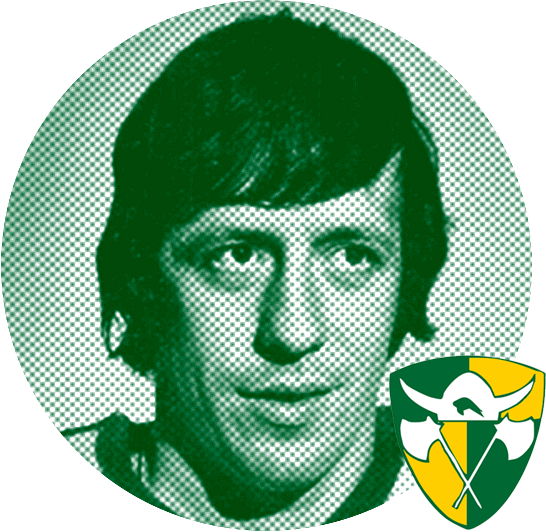
Steve Atkinson: Ex-Sabre, Captain
Facing the music – Playing for the NAHL Buffalo Norsemen is not what Steve Atkinson had in mind for the 9th year of his professional hockey career.
Drafted back in 1966 by the Red Wings, Steve finally finds a regular spot on an NHL roster on the 1970 Buffalo Sabres. Over the next four seasons, however, his scoring steadily declines, and the Sabres allow him to be snatched up by the Washington Capitals in the 1974 NHL expansion draft (where new teams draft unprotected players). Failing to thrive with the Caps (General manager Milt Schmidt likened Atkinson’s speed to that of a snail in a game against Minnesota on Oct. 12, 1974), Steve finds himself at the Norsemen’s doorstep in the fall of 1975. Accepting life in the minors–and the drastic pay cut–is a challenge for the 26 year-old. Coach Guy Trottier can relate.
“Steve comes to us with a confidence problem. We are more than happy to have him, and I’m fortunate to know his problem personally. Steve is facing it like a man. Most guys can’t face the music when they can no longer make a big club.” – “Atkinson: NHL vet searches for lost self-confidence.” Tonawanda News, September 25, 1975.
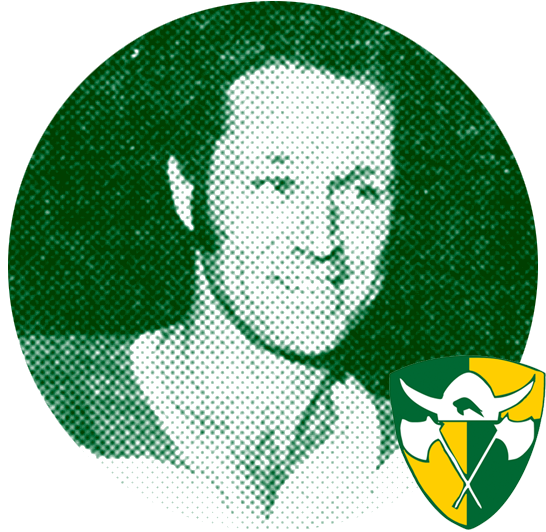
Keke Mortson: The Joker
“There’s nothing worse than losing unless it’s losing and not having any fun.” Cleland “Keke” Mortson is already a legend when he comes to the Norsemen late in the season to bolster the team’s playoff chances. For twenty seasons he has practiced his colorful antics across multiple minor league clubs.
“Critics label him a ‘hot dog’ and a ‘show-off’ and several unprintable things.” – The Hockey News, Feb 22, 1974
As a member of the Macon Whoopies (get it?), Keke wears #99, and revels in his brand of showmanship. “When fans in Charlotte started calling him a dirty old man, Mortson waited between periods one night so he’d be the last to leave the ice; he then put his stick under his arm and limped off the ice as if he were using a crutch.” (Ibid).
At 41, he will provide the Norsemen with crucial leadership heading into the playoffs. And as he has throughout his career, he will back it up with points.
“You could make a movie about Keke’s life” one Facebook-er remarks. “And it would be a long movie.”
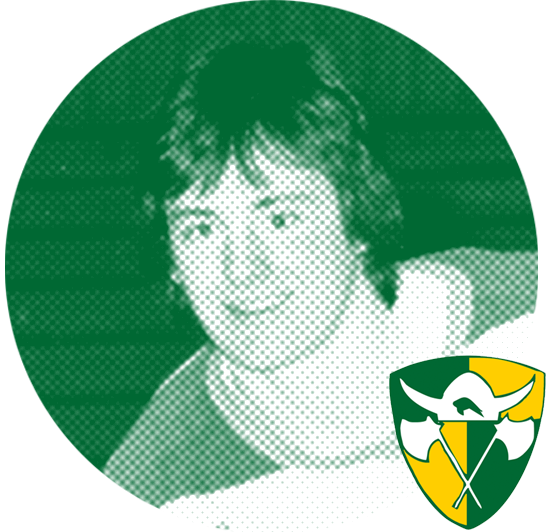
Greg Neeld: Sidelined Sabre
“Better than most guys with two eyes” – The eye lost in that opening scene is Greg Neeld’s. The tragic accident radically changes the life trajectory of the prized young defenseman. The Toronto Marlboros community rallies hard for him: the team pays his medical bills, and offers to spend “whatever amount of money is necessary” to research protective equipment that would better protect his remaining good eye (The Hockey News, February 1, 1974).
Surprisingly, the Buffalo Sabres draft Neeld in the fourth round of the 1975 NHL Amateur Draft. It’s a risky pick by Sabres coach Punch Imlach: League rules state that a player must have two sighted eyes to play.
Neeld begins a campaign to get the NHL rule changed. His father helps him develop a special hockey helmet with a visor, the first of its kind. They present their adaptation and arguments at the annual NHL meeting in Toronto. The coaches vote to let Neeld in, but the NHL Board of Governors forcefully reject the petition. Undaunted, the Neelds file a multi-million dollar lawsuit against the league.
In the meantime, Neeld signs as a free agent with a team in the World Hockey Association, a respectable pro league with no such vision restrictions. The team: The Toronto Toros, parent club of the Buffalo Norsemen.
Neeld is a world-class shit-talker. After being suspended for two playoff games, he will be targeted on his return for the notorious pre-skate brawl immortalized in Slap Shot.
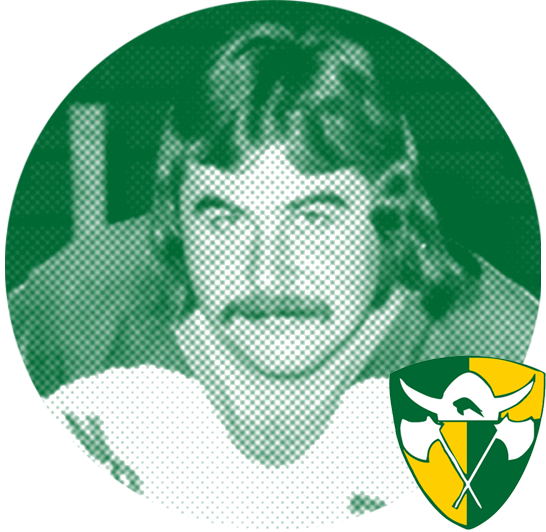
Shane McConvey: “The Pig”
“Kill, Shane, Kill!” This is the cry that rings throughout the hollow steel hall of the Tonawanda Sports Center when this squat defenseman is on the ice. He is only too happy to oblige the chanting fans: he will pile up the third-most penalties on the team in ’75-76, with 136 minutes. Shane spent two seasons with the Niagara Falls Flyers before going pro with the Norsemen.
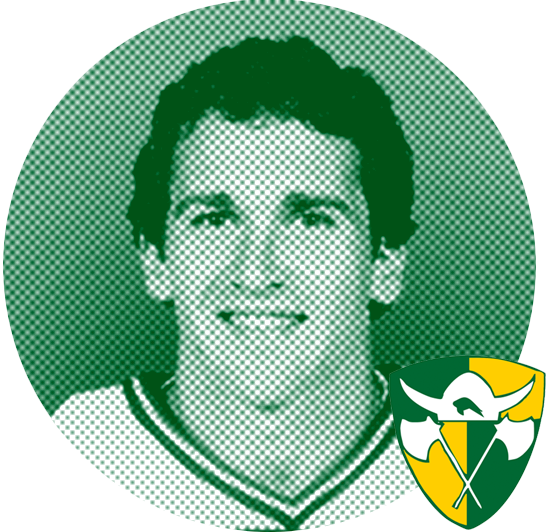
Paul Crowley: Penalties and Points
“If every player on our team had his desire to go along with their talent, we would have been in first place all along.”
– Norsemen player-coach Guy Trottier.
Crowley is drafted by both the NHL and the WHA (the Toronto Maple Leafs and the Houston Aeros, respectively). He’s hockey-small at 5’9″, but he distinguishes himself with his fierce play and reliable point production. He”ll play a handful of games for the WHA Toronto Toros, but spends almost all season with Buffalo. He will finish fourth in points on the Norsemen–and second in penalties.
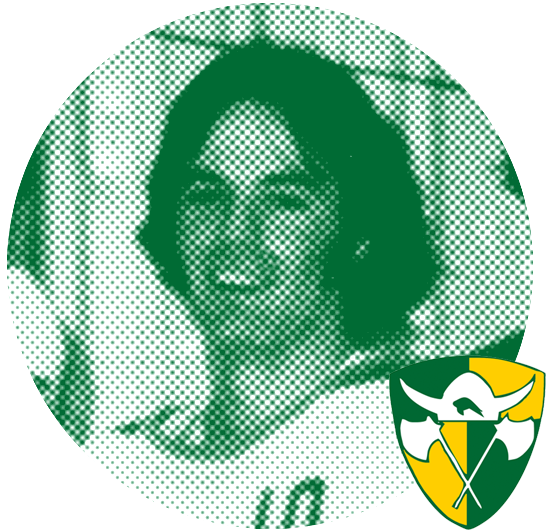
Charlie Labelle: End of the Road
Charlie Labelle plays four years of college hockey in St. Louis before getting his first taste of the pros with the Norsemen. Charlie establishes himself as a key part of the team, both tough and able to contribute offensively. He finishes 6th on the team in scoring (29 goals, 30 assists), and 4th in penalty minutes (110).
Like Shane McConvey, his Norsemen season is his first and final appearance in professional hockey. After the Game 5 playoff melee in Johnstown, Labelle leaves the sport, and purportedly becomes an accountant in St. Louis.
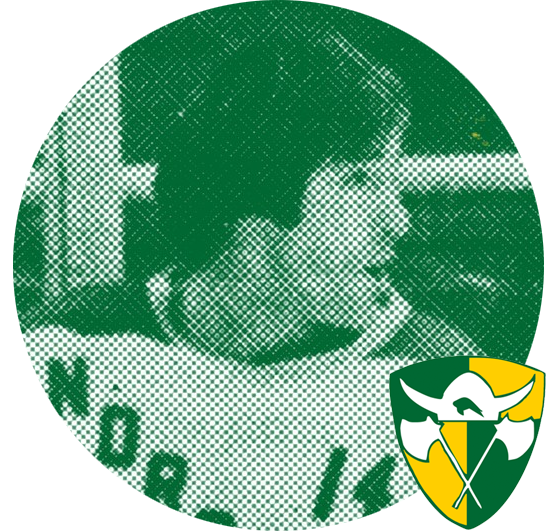
Fred Hunt, Jr: Buffalo-born
One of the few American players on the Norsemen, Fred Hunt Jr. grows up as Buffalo hockey royalty, with his father a Bisons legend and Sabres assistant GM. That name cuts both ways: after Nichols and the University of Vermont he lands on the Sabres’ negotiating list, but feels he must be better than everyone just to dodge accusations of favoritism. He’s shuffled through Cincinnati, Dayton and Charlotte, then has his best camp destroyed by a broken jaw. The result, in his words, is a couple of “wasted” years riding buses while the Sabres stay overly cautious about promoting the boss’s son.
In 1975 he finally walks away. Convinced the Sabres offer no real future, Hunt Jr. skips another camp and answers Willie Marshall’s call to try out for the new Buffalo Norsemen, close to home and coached by his dad’s old sniper Guy Trottier. His father approves, saying Freddy needs more checking and will get it there, and raves about Trottier as scorer and coach. With the N-men, Hunt slots in as right wing on the second line.
He starts strong: in 13 games he has already stacked up six goals and seven assists. When he is traded to the NAHL Codders (who are on their way to folding), he opts to leave hockey behind.
Photos
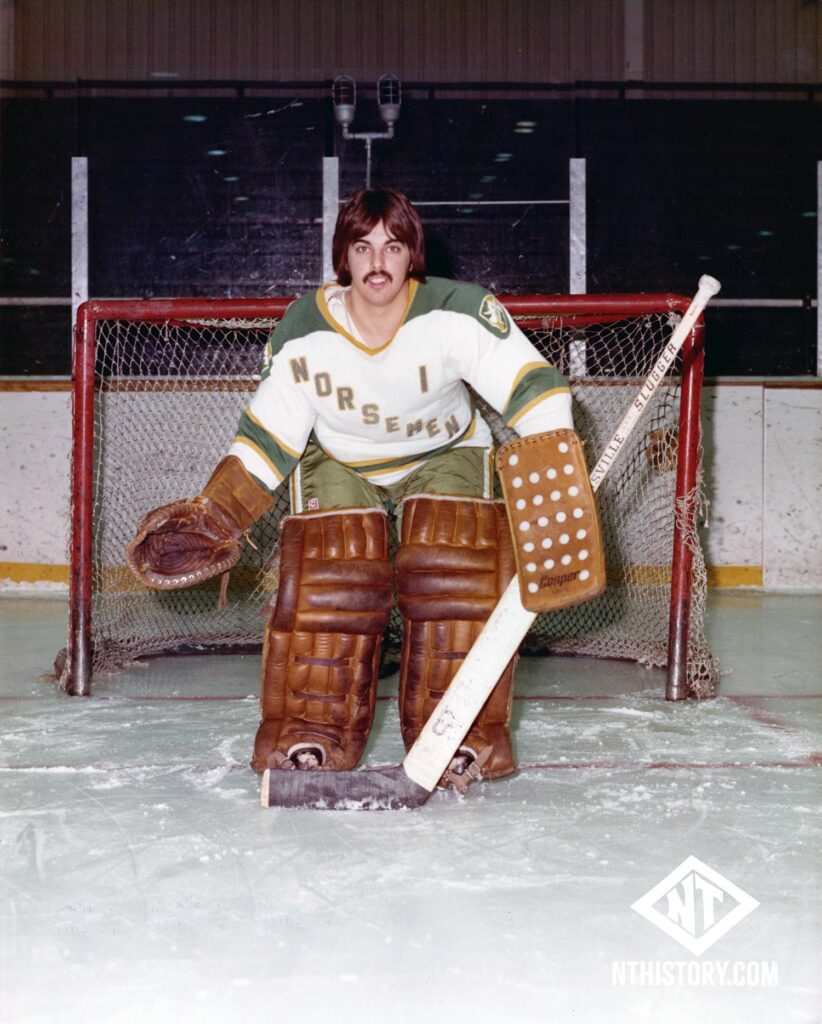
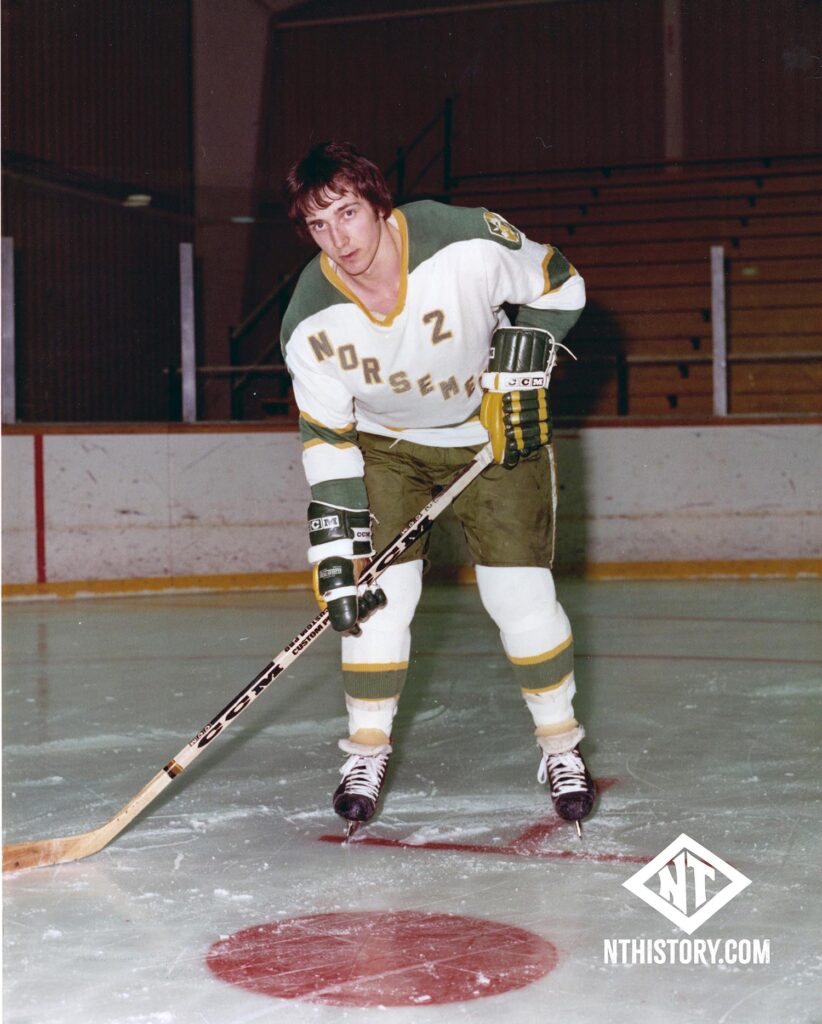
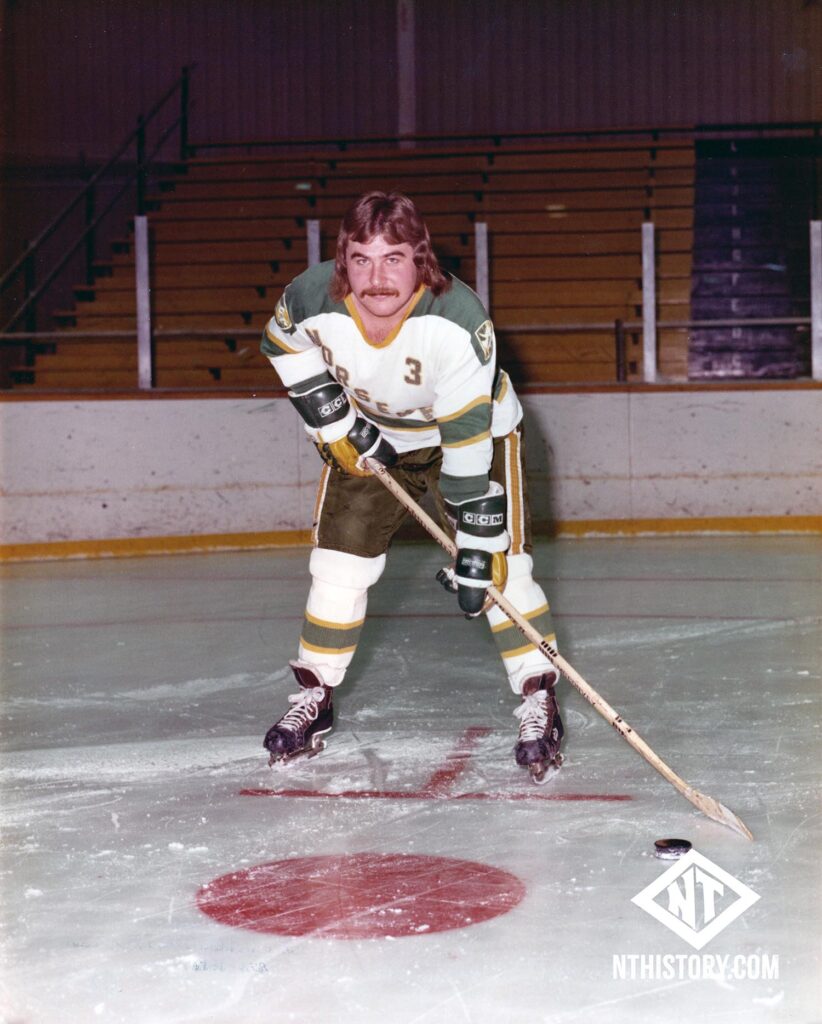
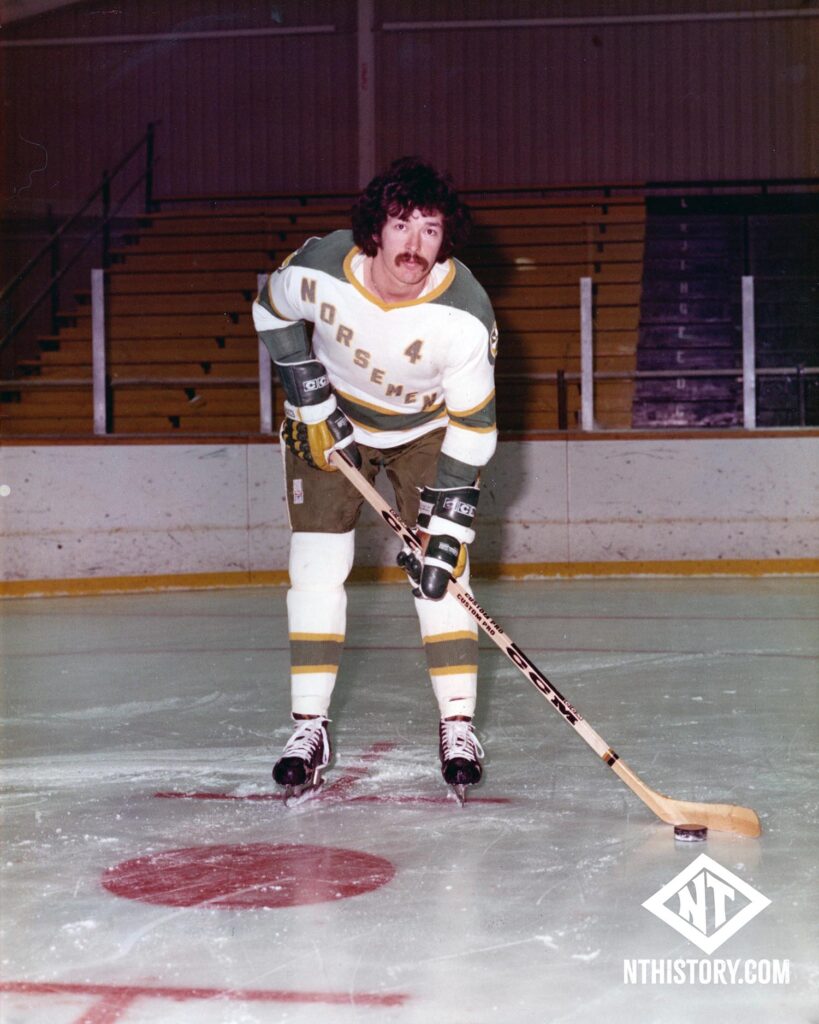
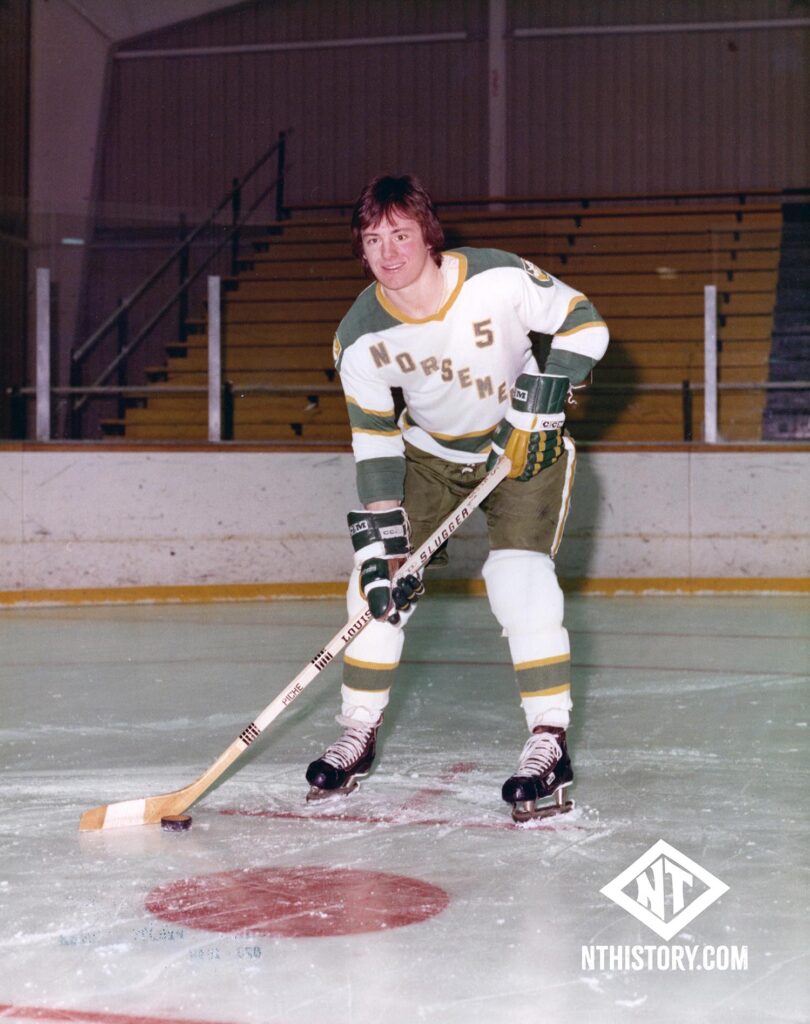
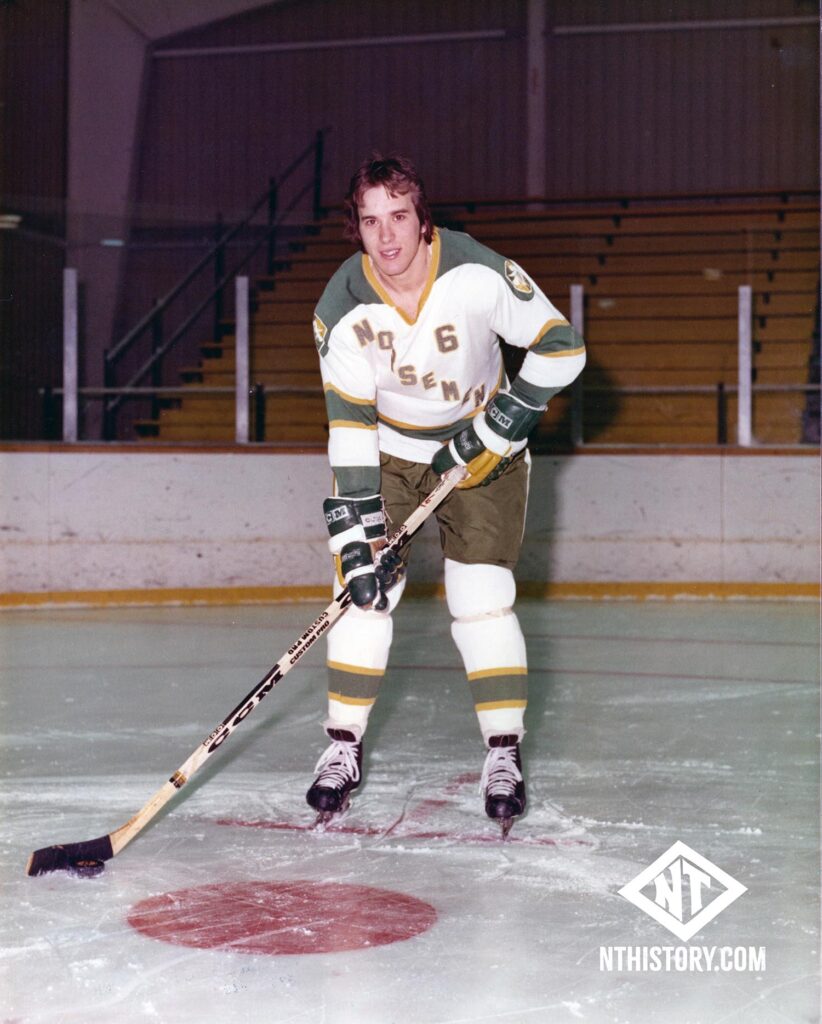
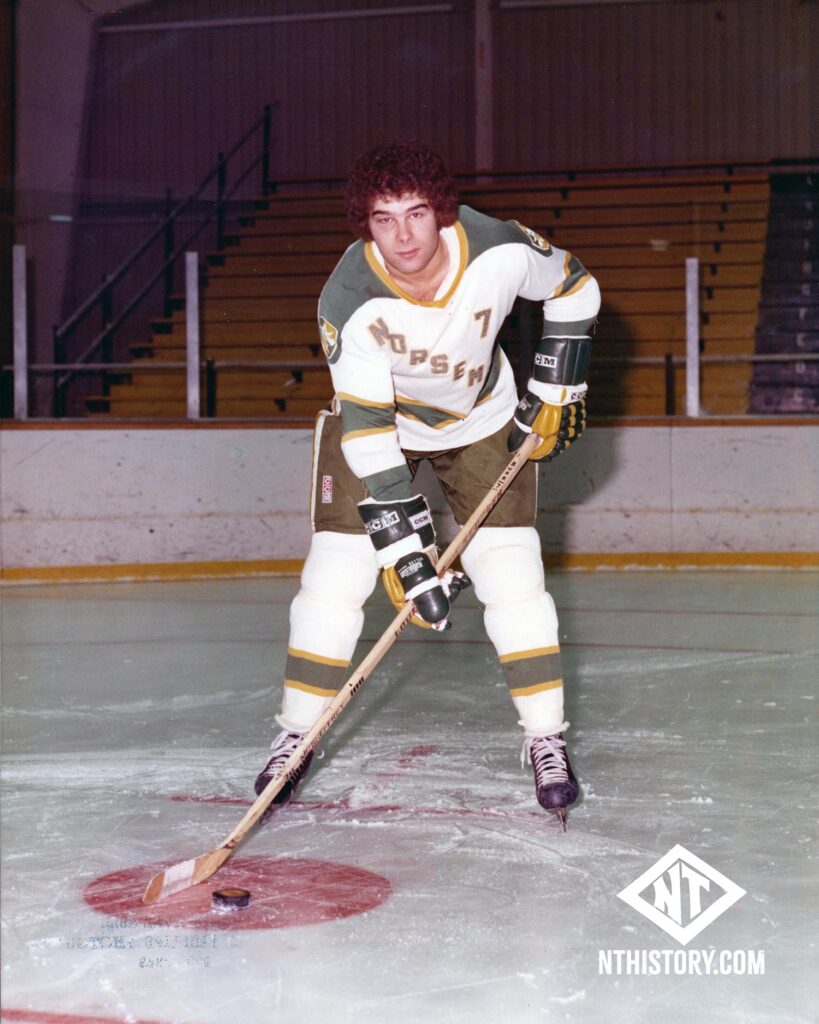
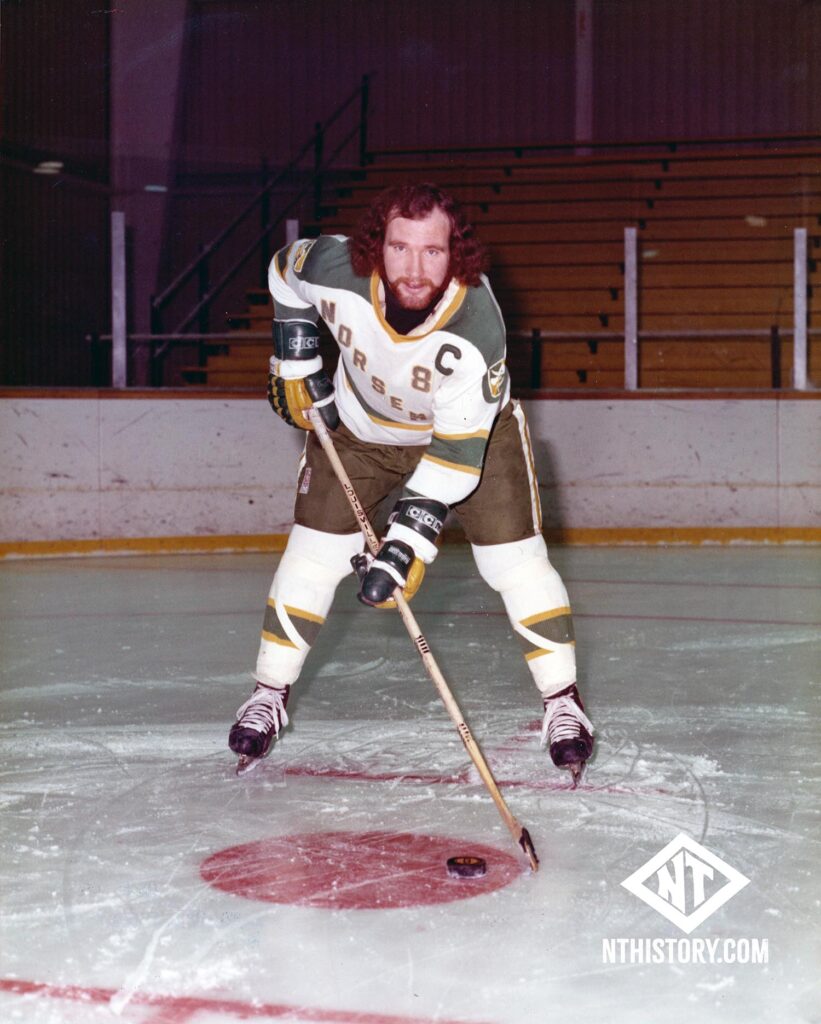
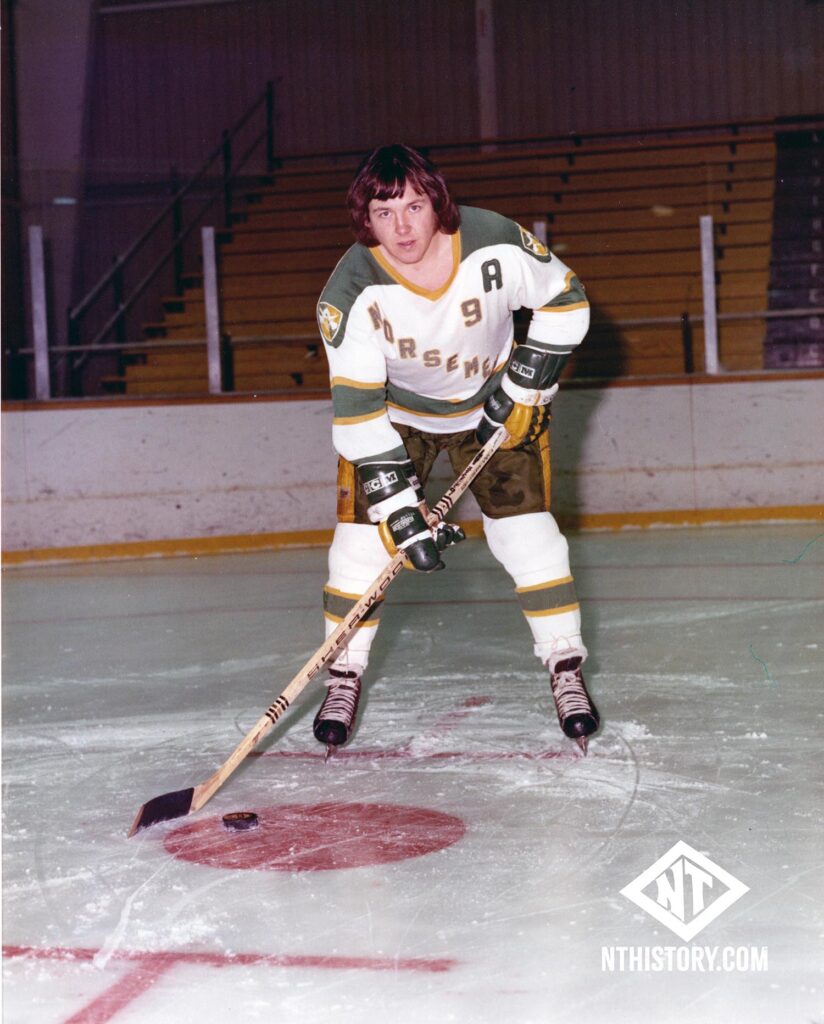
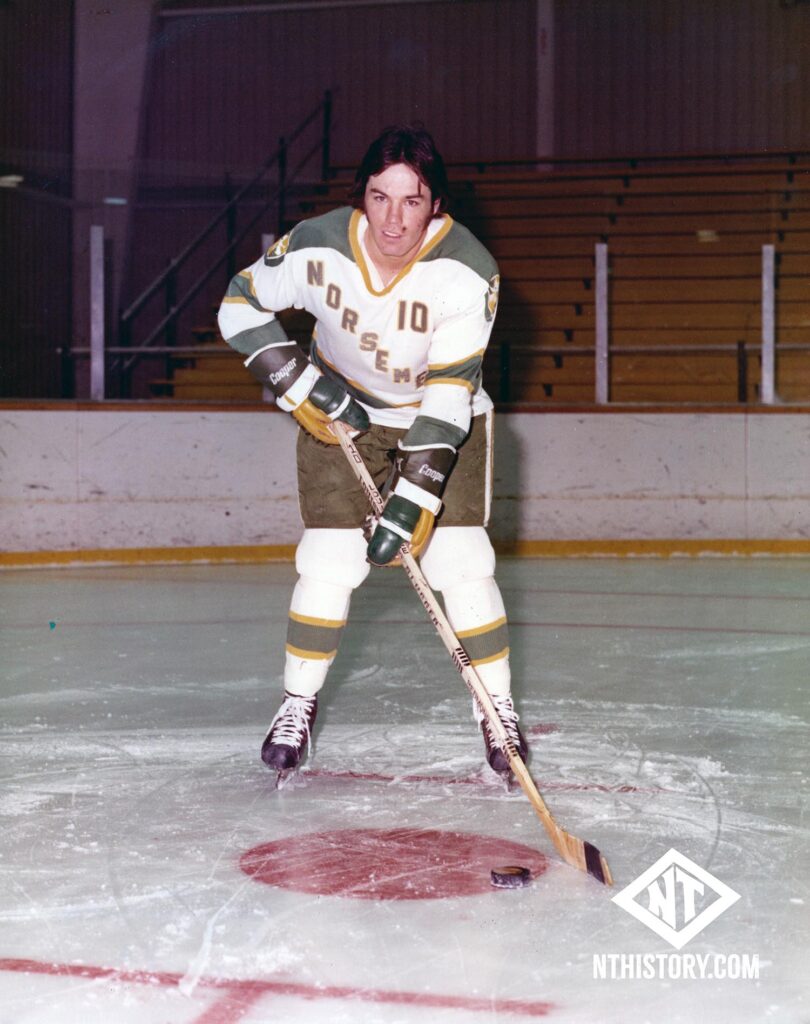
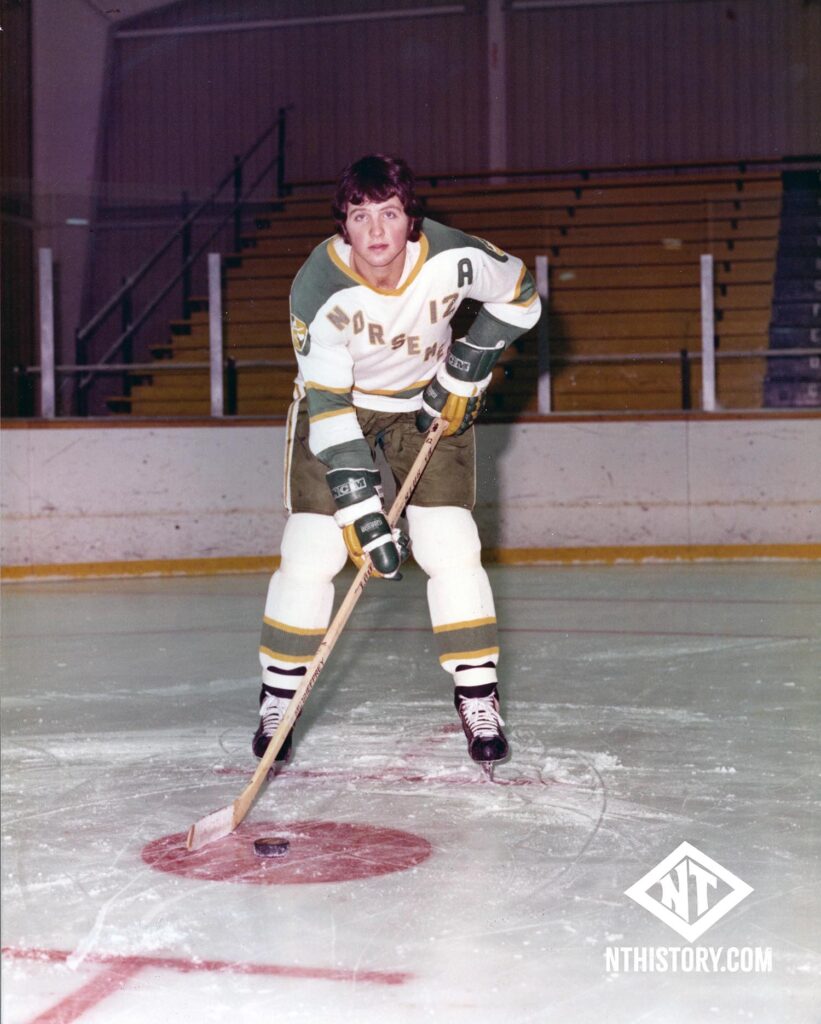
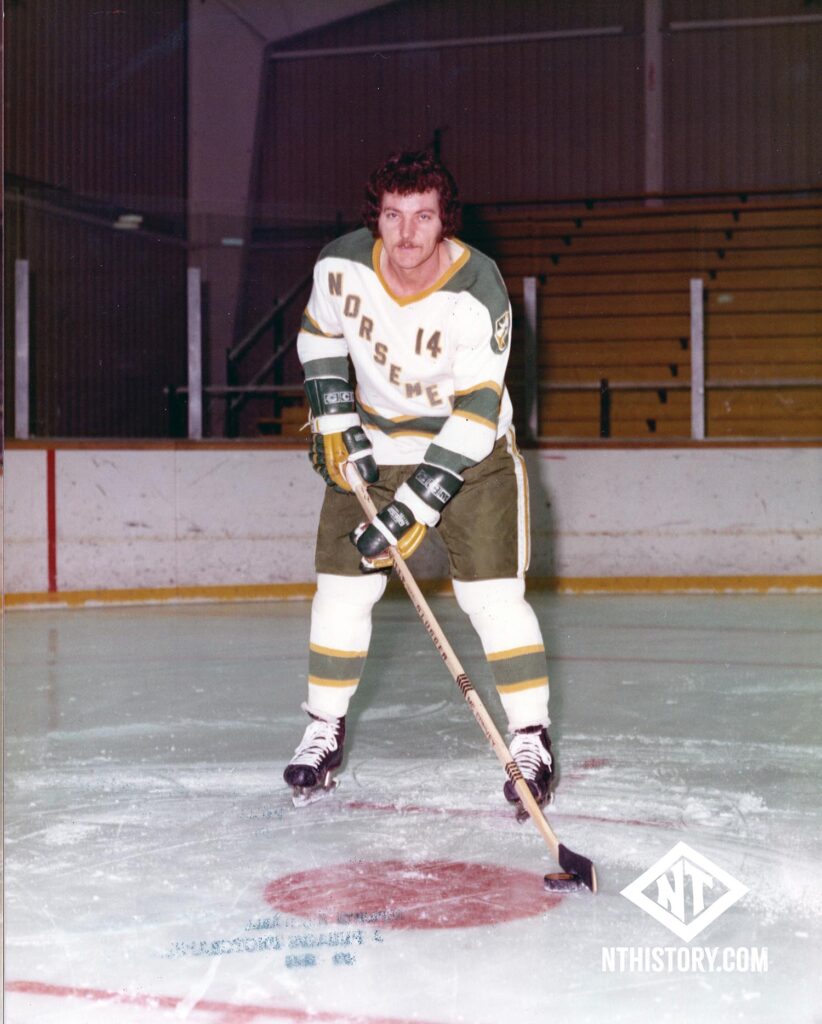
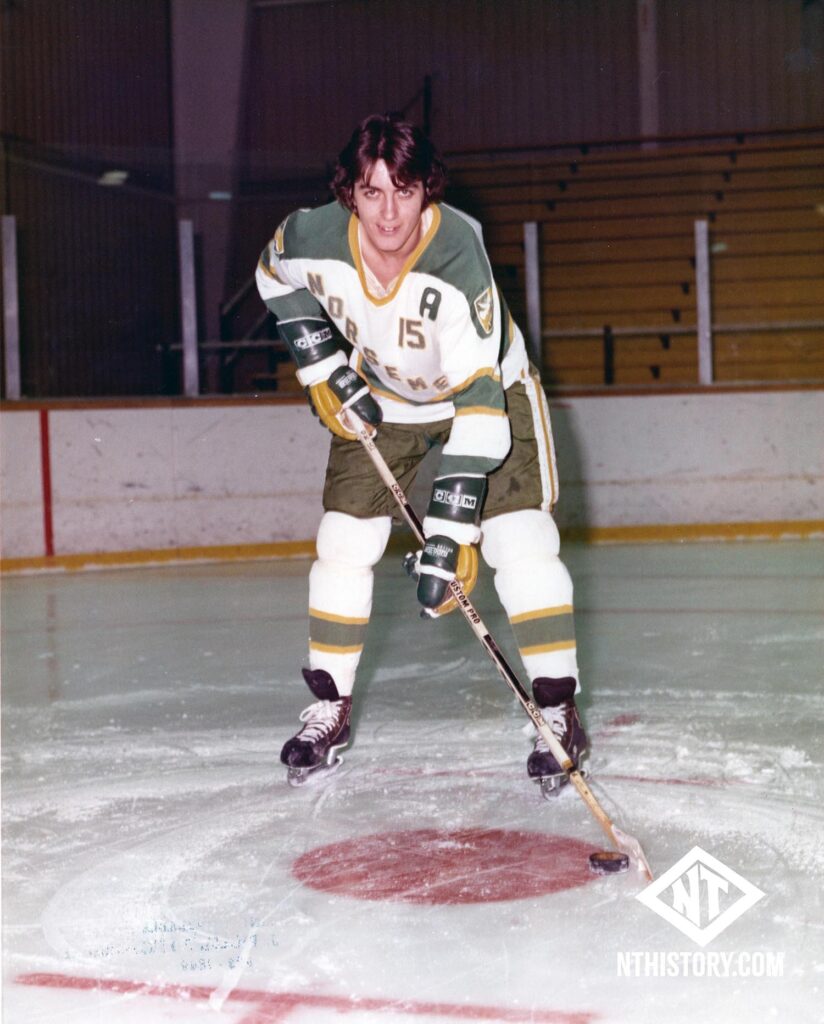
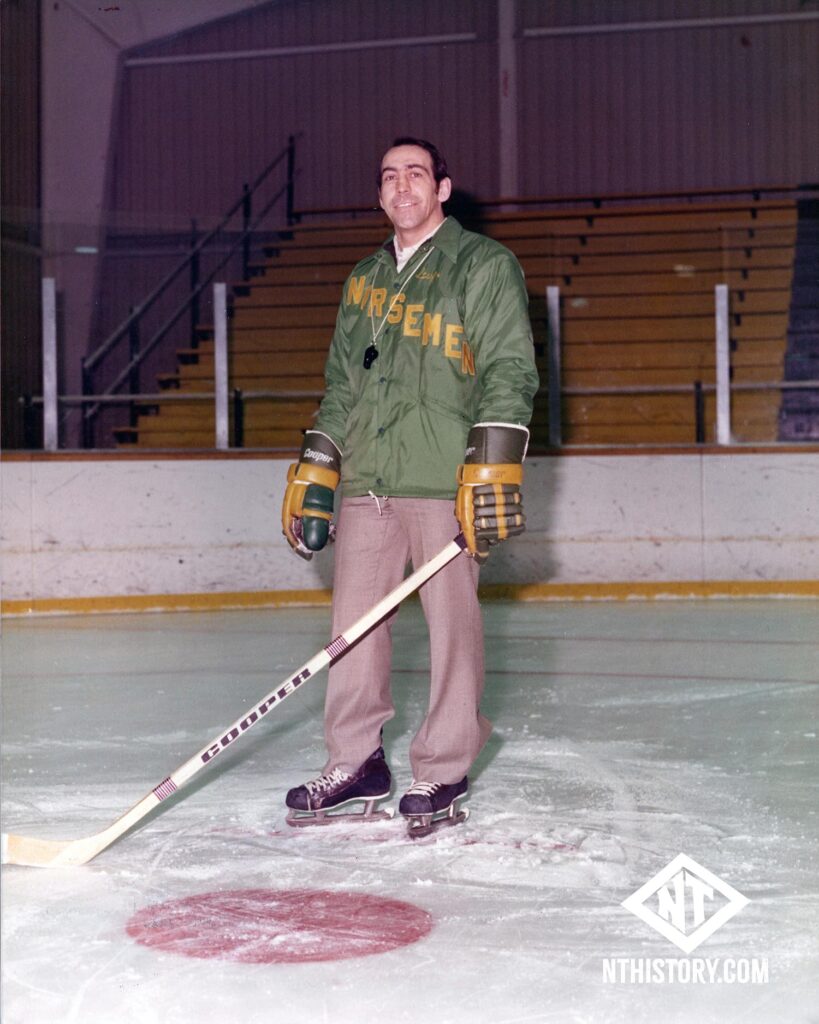
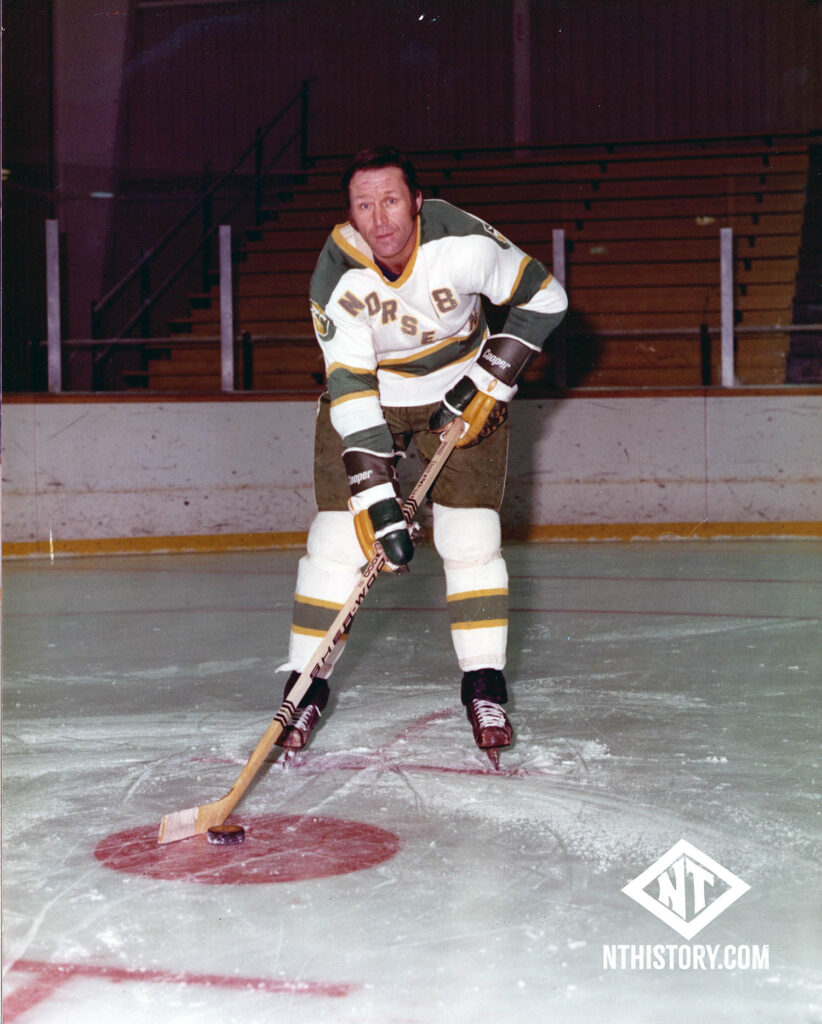
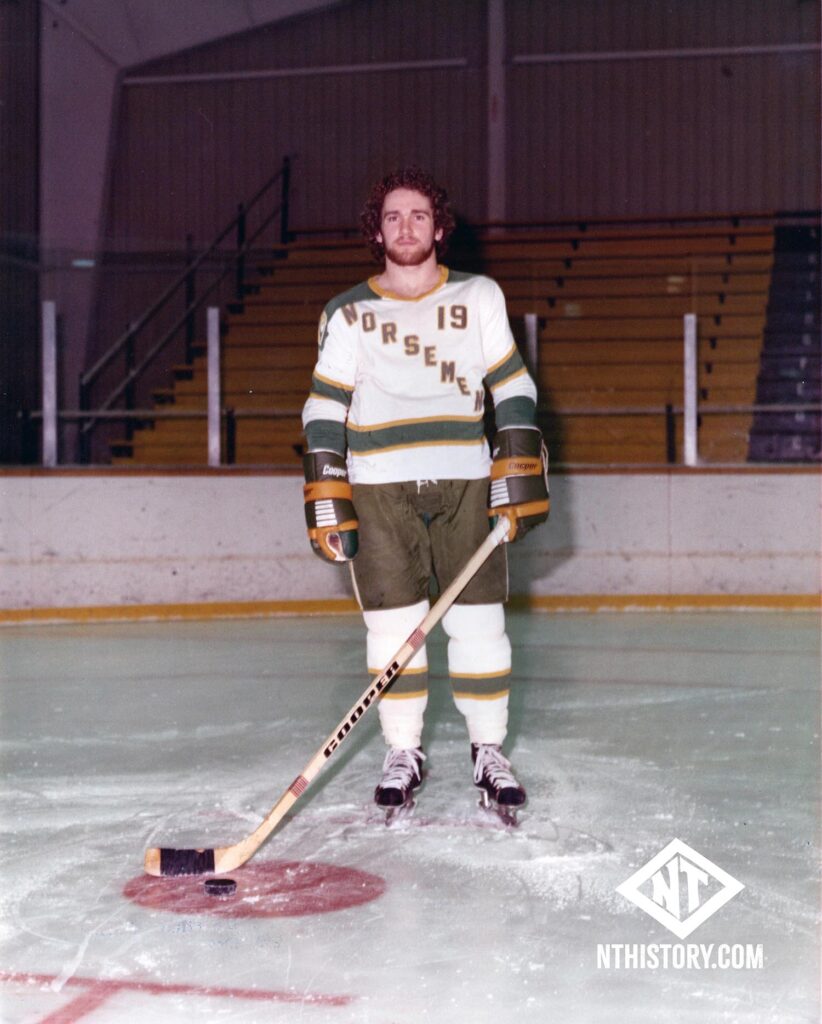
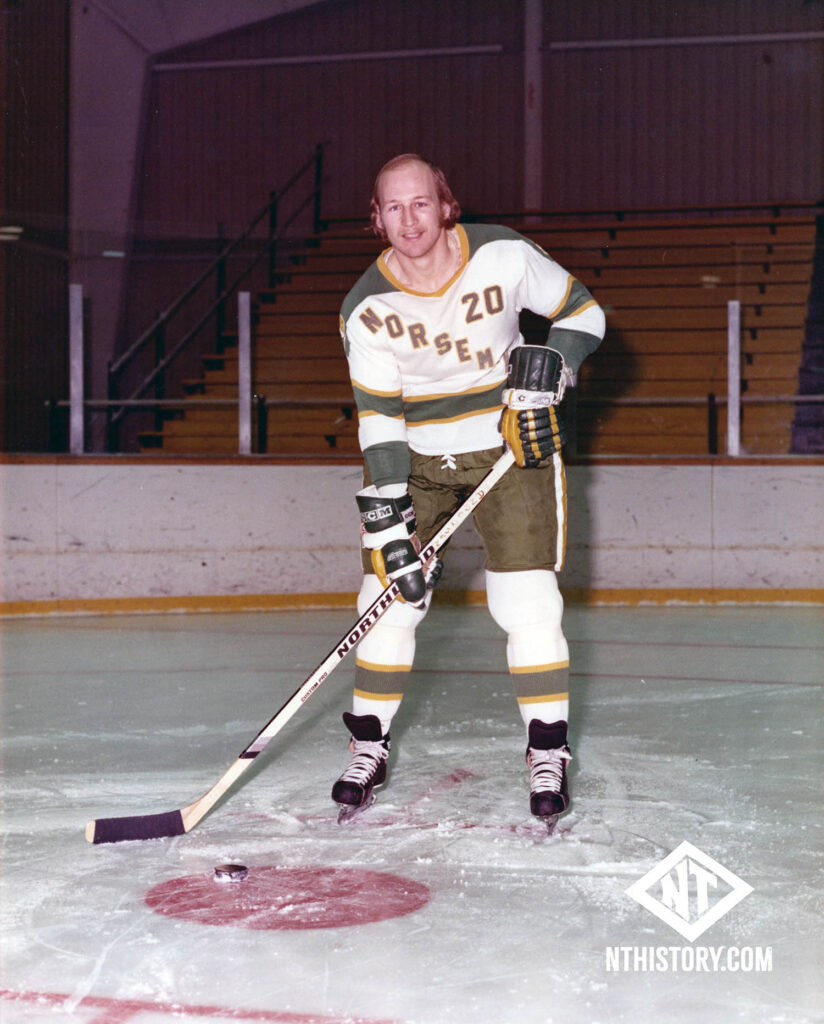
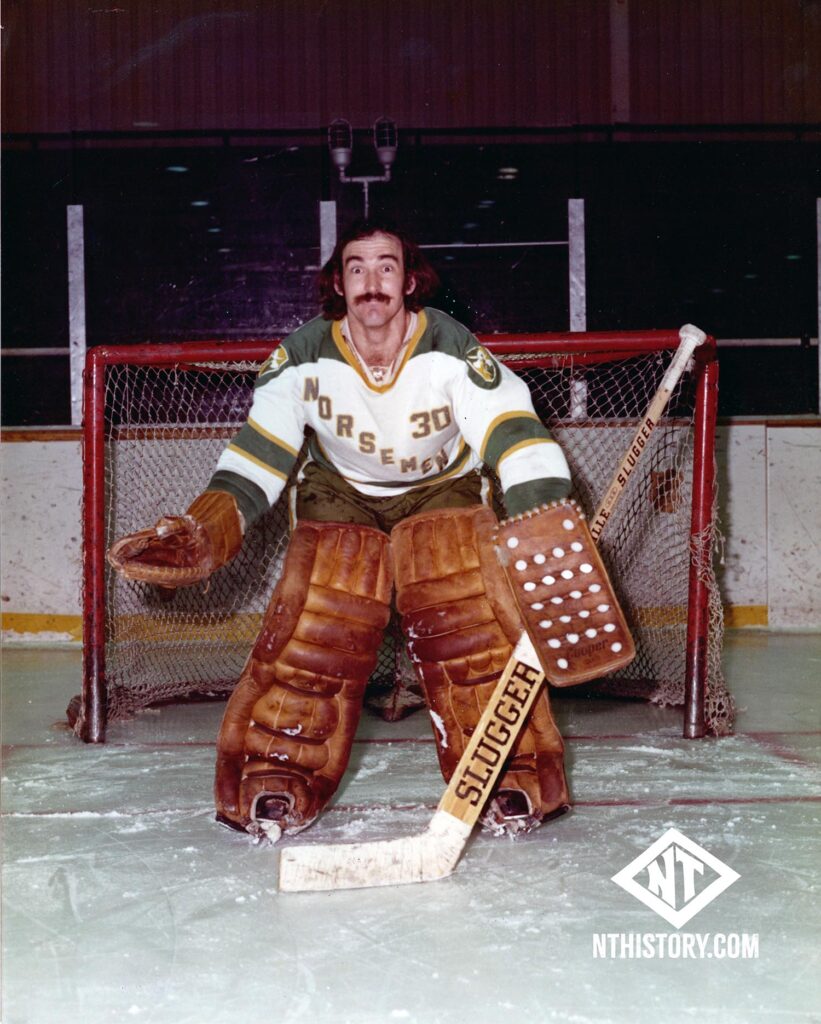
These team and player photos were taken at the Tonawanda Sports Center between February and March of 1976. Many have not been seen in decades. Thanks to Kim Turecki-Chiodo for these valuable pieces of North Tonawanda history!
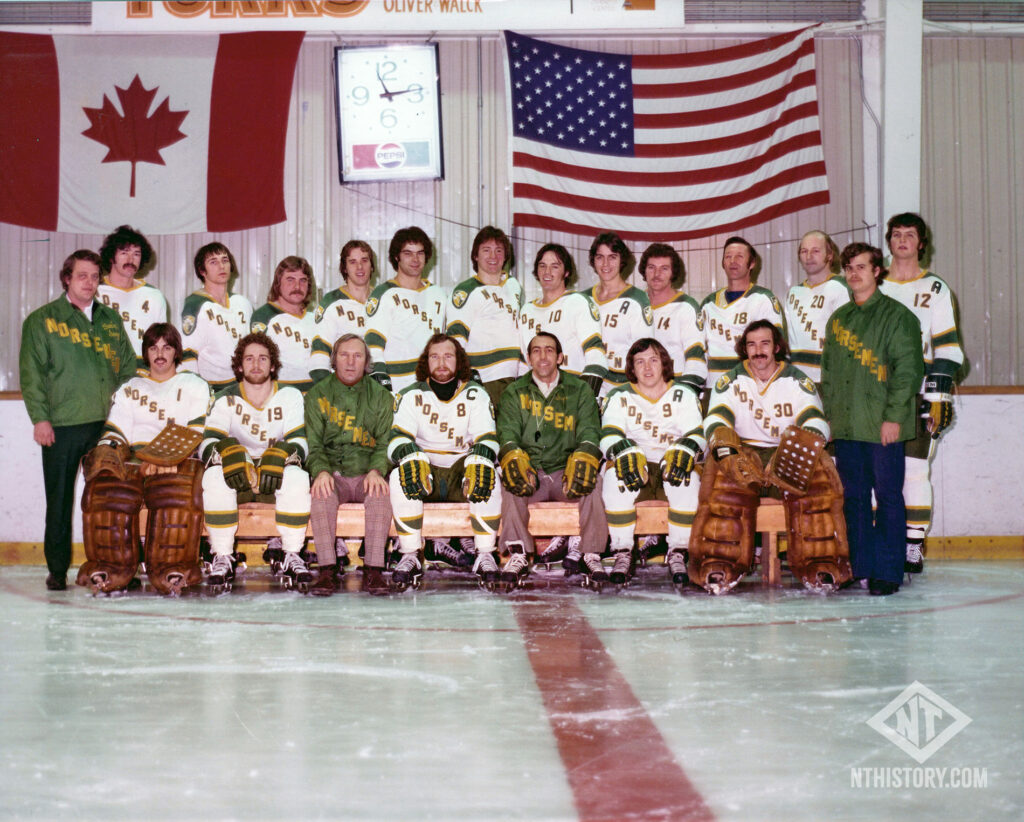
Front row, L-R: Mario Viens, Paul Crowley, Willie Marshall (GM), Larry Gould (C), Guy Trottier (player-coach), Bill Steele (A), Jim Mackey. Back row, L-R: Gary Stevens (trainer), Derek Harker, Wayne Morin, Shane McConvey, Reg Lahey, Dave Peace, Greg Neeld, Charlie Labelle, Claude Noel (A), Jim Stanfield, Keke Mortson, Denis Anderson, (unknown), Dave Given.
THE RISE AND FALL OF THE BUFFALO NORSEMEN

NEXT: BUFFALO VS. EVERYONE
After a spectacular start, player drain to the parent Toros, nagging injuries and sagging attendance begin to take their toll on the Norsemen. Will player-coach Guy Trottier’s bad back make it? Can the N-Men outlast its opponents to make the playoffs? And is there a conspiracy against the Norsemen afoot in the highest reaches of the NAHL? If you are enjoying this series, please consider supporting our work below!

Leave a Reply